Appearance
Risk Analysis
Risk analysis is the fifth step of FMEA analysis, with the goal of using S, O, D values to perform risk matrix analysis, identify high-risk areas, and determine priorities. This guide explains how to perform risk analysis.
Risk Matrix Analysis
- Goal: System performs risk matrix analysis based on S, O, D values, identifies high-risk areas and determines priorities.
- Role: Risk analysis role member
- Entry:
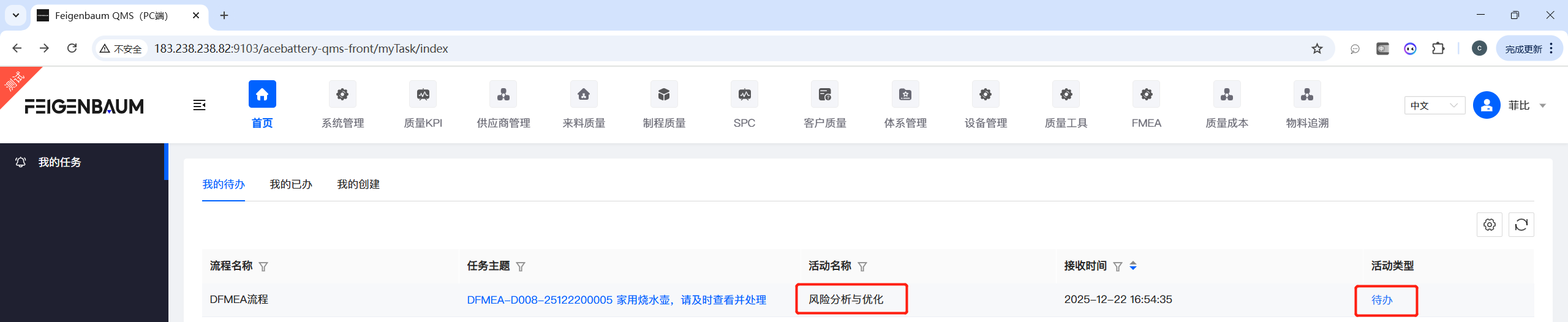
- Home/My Tasks/To Do
- Top menu bar/Risk Matrix Analysis
- Operations:
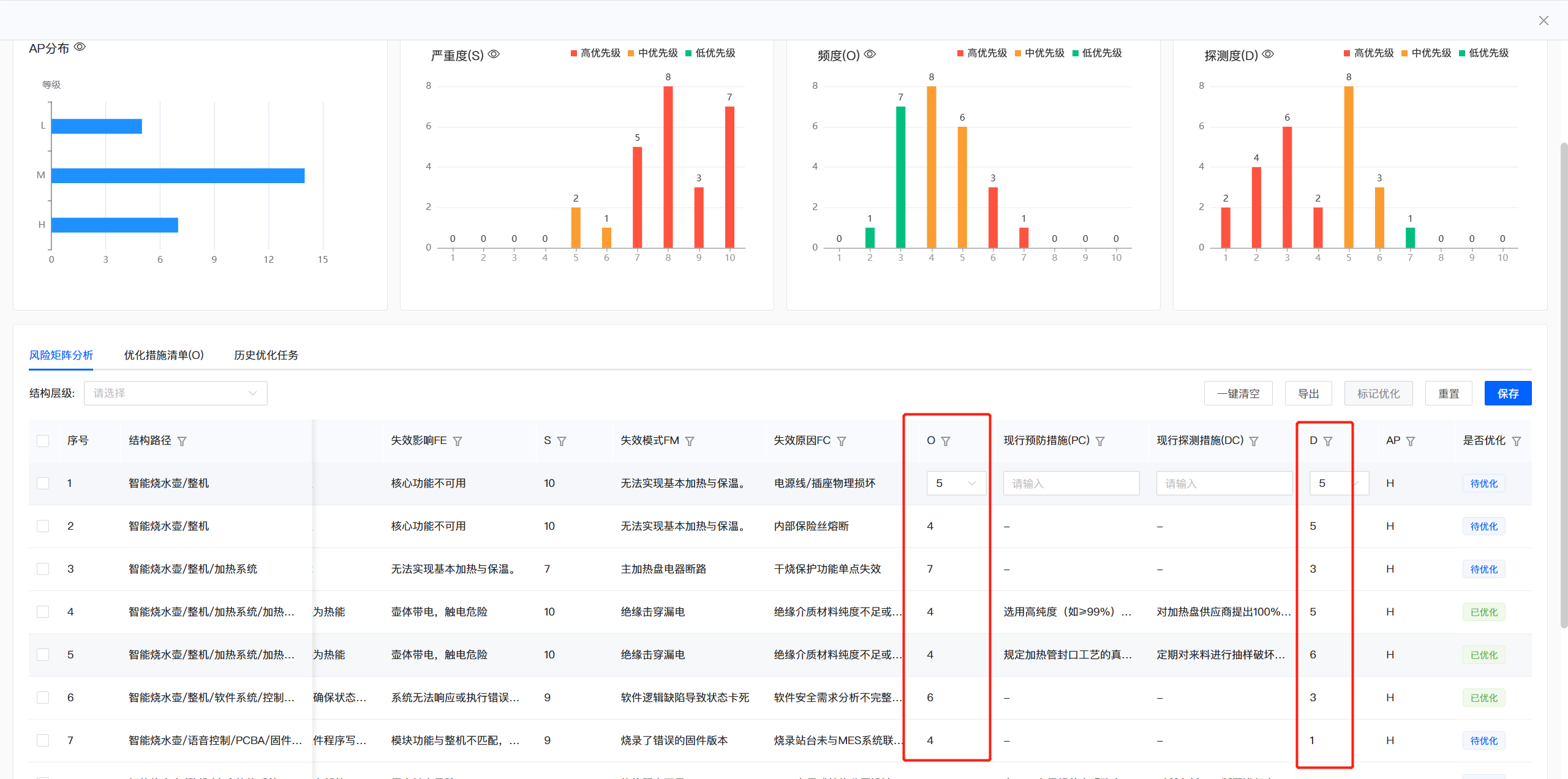
- For each failure chain, select Severity (S), Occurrence (O), Detection (D) ratings (1-10) from dropdown in the table.
- System automatically calculates Action Priority (AP): High (H), Medium (M), Low (L).
- Visualization: Risk matrix chart displays distribution of all failure points in real-time.
DVP (Design Verification Plan)
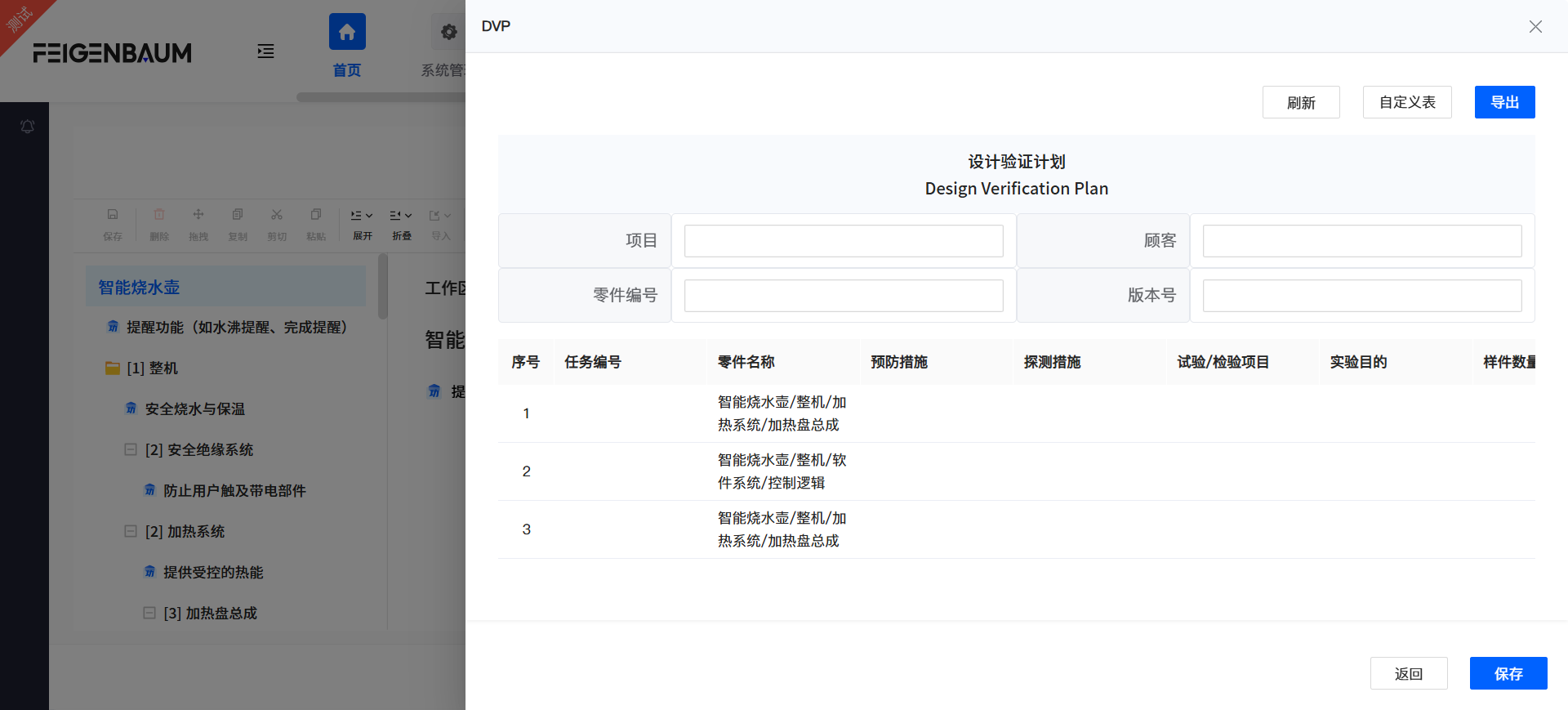
DVP is used to summarize the optimized detection measures from risk analysis, typically consisting of test project names, test methods, sample sizes, and expected pass criteria.

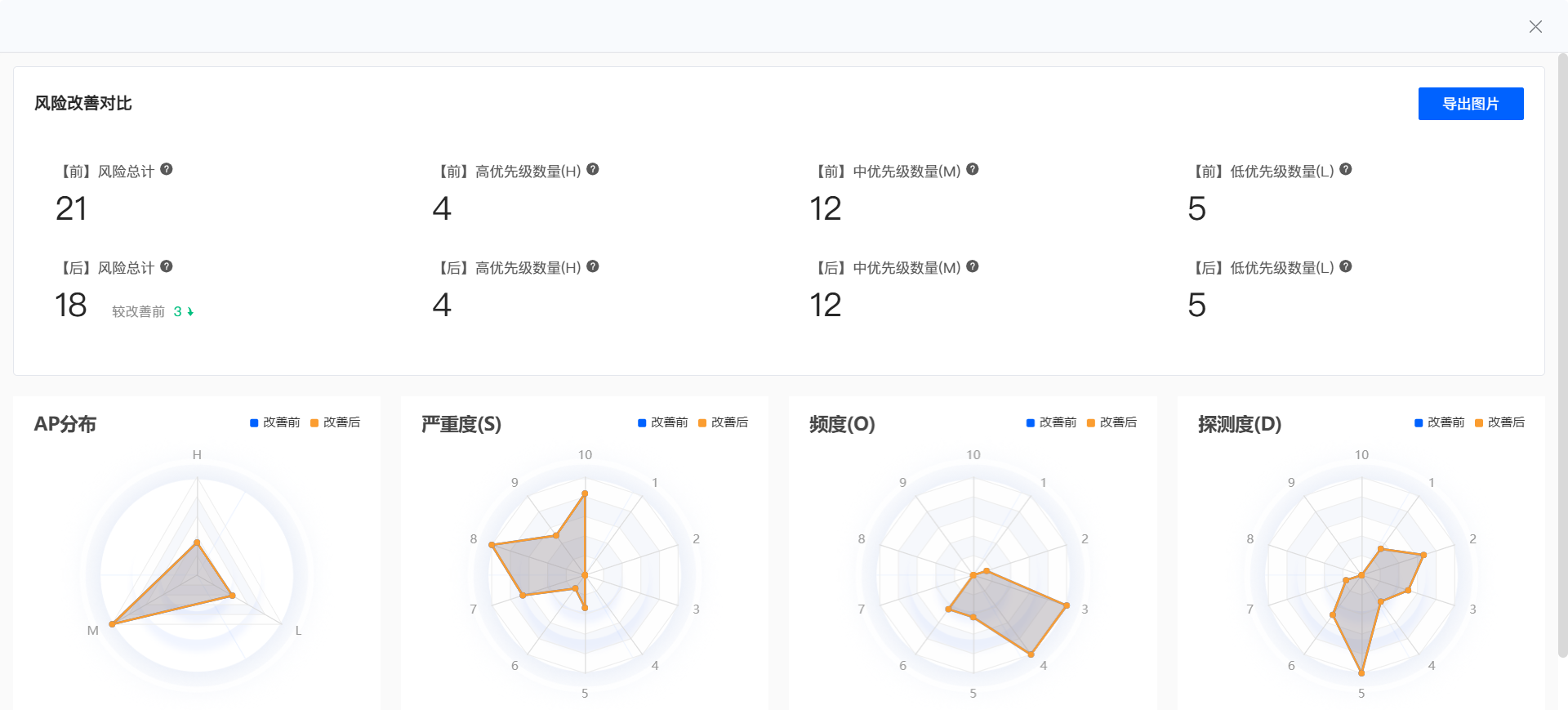
Risk Improvement Comparison
Risk improvement comparison is used to display a parallel presentation of the initial risk assessment (based on current control's Severity S, Occurrence O, Detection D, and AP ratings) and new risk scores obtained after implementing and verifying optimization measures, thereby quantifying the risk level reduction and improvement effect.